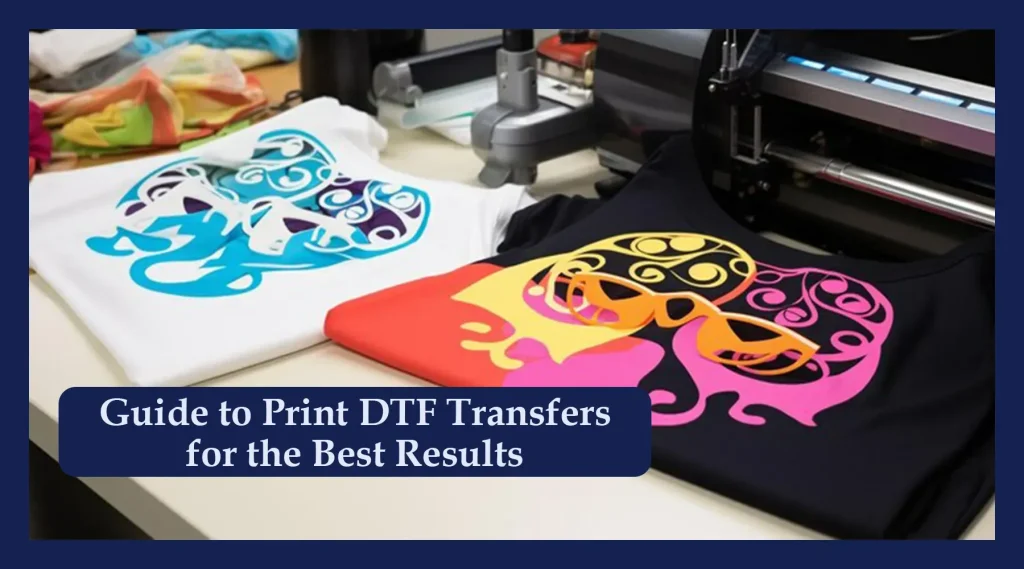
DTF transfers have transformed fabric decoration by offering a flexible, cost-effective method for customizing apparel across a wide range of fabrics, finishes, and market needs, making it accessible for independent brands and makers. For practical applications, you can use DTF transfers for hoodies and DTF transfers for tees to achieve vibrant colors, a soft hand feel, and durable adhesion even after washing, while enabling quick iterations and small-batch testing. As part of the broader DTF printing landscape, this approach pairs printed designs with adhesive powders and heat pressing to embed artwork into garments, enabling reliable results across cotton, blends, and performance fabrics. When deciding between DTF transfers and other techniques, consider your fabric mix, production volume, and whether you prefer the stability of DTF vs DTG in mixed-fabric runs, as well as color complexity and return on investment. With careful testing, the right equipment, and clear care guidelines, you can deliver striking, durable results that stay comfortable and vibrant through countless wears and washes.
Another way to frame this technique is as a direct-to-film transfer method, a film-based garment decorating process that prints onto a transfer sheet, applies adhesive, and uses a heat press to embed color in fabrics. From an LSI perspective, consider terms like film transfer, adhesive-coated sheets, heat-press application, and fabric compatibility, which help explain why this approach compares favorably with DTG, dye-sublimation, and HTV on blended fabrics.
DTF Transfers for Hoodies: Benefits, Applications, and Best Practices
DTF transfers for hoodies offer a soft hand feel and flexible adhesion that stays comfortable as you move. DTF printing enables vibrant color reproduction on common hoodie substrates such as cotton-rich fleece and polyester blends, making detailed artwork possible without sacrificing wearability.
To maximize durability on hoodies, prepare the fabric with a brief pre-press to remove moisture, then cure the adhesive powder properly after printing. The right combination of temperature, time, and pressure ensures the transfer bonds evenly and resists cracking during wear and washing.
How to apply DTF transfers is a practical skill: print the design on DTF film, apply adhesive powder, cure the powder, and press onto the hoodie with steady pressure. Following the transfer manufacturer’s guidelines for temperature (around 160–170°C) and duration (12–15 seconds) helps you achieve consistent results.
DTF Transfers for Tees: Color, Detail, and Durability
DTF transfers for tees deliver crisp edges and robust color on 100% cotton and cotton blends. The process supports gradients and photographic imagery that stay sharp after multiple washes, making tees a reliable canvas for complex artwork.
Successful tees applications rely on proper fabric prep, precise alignment, and post-press cooling. Always test on a sample fabric to adjust heat, pressure, and curing time for the specific tee you’re decorating.
DTF printing workflows help optimize color strength on darker fabrics, ensuring consistent results across different tee batches and reducing the risk of white edges or faint imagery.
DTF Printing Technology: Films, Adhesives, and Finishes
DTF printing technology uses a specialized printer to deposit pigment onto a permeable film, followed by an adhesive powder coating and curing. The finished sheet is then transferred to fabric with heat, producing a durable image that flexes with the garment.
Choosing the right adhesives, film thickness, and curing process affects wash durability and hand feel. A reputable DTF printing setup can handle a wide range of fabrics, from lightweight tees to heavy hoodies, with consistent results.
How to Apply DTF Transfers: Step-by-Step Guide for Consistent Results
Pre-press the garment to remove moisture and create a smooth surface. Print, apply adhesive powder, and cure before aligning the transfer on the fabric.
Protect and press with even pressure, then peel warm or cold as directed by the transfer guidelines. Finish with a brief post-press if recommended to secure the bond.
DTF vs DTG: Choosing the Right Method for Your Garments
DTF offers broad fabric compatibility, including blends and performance fabrics, making it a versatile option for hoodies, tees, and athletic wear. It often provides lower costs for small runs and reliable color accuracy on colored garments, compared with DTG in some cases.
DTG excels on 100% cotton with very high-detail artwork and a soft hand. When deciding, consider garment type, color, production volume, and the difference in feel between a direct-to-film transfer and a direct-to-garment print.
Frequently Asked Questions
How to apply DTF transfers for hoodies and tees: what are the essential steps?
DTF transfers involve printing on film, applying adhesive powder, curing, then heat pressing to the garment. Start with a pre-press to remove moisture, then position the transfer accurately, cover with a protective sheet, and press at about 160–170°C (320–338°F) for 12–15 seconds. Peel the carrier warm or cold per manufacturer guidance, and finish with a brief post-press to set the design. Finally, let the garment cool and follow care guidelines to maximize durability.
DTF vs DTG: When should you choose DTF transfers over DTG for hoodies, tees, and athletic wear?
DTF transfers suit a wider range of fabrics, including blends common in hoodies, tees, and athletic wear, and are often more cost-effective for small runs. DTG excels on 100% cotton with ultra-high-detail artwork. Use DTF when you need reliable color on colored fabrics or work with blends and performance fabrics; reserve DTG for pure cotton designs where detail is paramount.
What fabrics are best for DTF transfers for hoodies and tees, and how does fabric choice affect DTF printing results?
Hoodies respond well to cotton-rich or polyester–cotton blends; tees perform best on 100% cotton or cotton blends. Athletic wear with polyester and spandex can work, but stretch requires careful heat and pressure. Always test a small sample on each fabric type and pre-press to remove moisture for consistent results in DTF printing.
Can DTF printing handle complex color gradients on tees and athletic wear?
Yes, DTF printing supports full-color designs, gradients, and photorealistic images with sharp edges. For hoodies and athletic wear, verify color accuracy and test prints on the fabric, as colors may shift slightly compared to white paper. Ensure proper curing and use quality film to maintain edge detail and durability.
What are common mistakes when applying DTF transfers for hoodies or tees, and how can you avoid them?
Common mistakes include skipping pre-press, uneven pressure, and not testing fabric types before production. Also avoid rushing the peel; follow transfer-specific guidelines for warm or cold peels. Ensure proper curing of the adhesive powder, use a flat platen, and let garments cool before handling to prevent edge lift or cracking.
| Aspect | Key Points |
|---|---|
| What are DTF transfers? | – Printing onto a permeable film, coating with adhesive powder, curing, and transferring to fabric with a heat press. – Results in a vibrant, durable image that can bend and stretch with the garment. – Works on cotton, polyester blends, and athletic wear; suitable for hoodies, tees, and performance fabrics. |
| Why choose DTF transfers for hoodies, tees, and athletic wear? | – Soft hand feel and elasticity for hoodies; prints stay comfortable as the garment moves. – Nuanced color reproduction and sharp edges for tees. – Tolerates blends (polyester/spandex) in athletic wear when heat and pressure are controlled. – Benefits: Versatility, Durability, Cost-effectiveness, Easy color handling. |
| What you need to apply DTF transfers | – DTF printer and film – Adhesive powder and curing – Heat press – Weeding tools and protective sheets – Garments (hoodies, tees, athletic wear) – Teflon or silicone sheet – Pre-press equipment |
| Fabric compatibility and preparation | – Hoodies: Cotton-rich or poly-cotton blends; pre-wash if advised; pre-press; consider fleece thickness and knit density for temp/time. – Tees: 100% cotton or cotton-poly blends; test area for color accuracy. – Athletic wear: Polyester/spandex blends; stable weave; avoid high moisture or heavy coatings. – General tip: Always test a sample on each fabric type before a full run. |
| Step-by-step: applying DTF transfers | 1) Prepare garment: Pre-press 5–8 seconds. 2) Print and cure: Print on DTF film, apply adhesive powder, cure per instructions. 3) Position and align: Align precisely on garment. 4) Protect and press: Use protective sheet; typical starting settings ~160–170°C (320–338°F) for 12–15 seconds; cooldown under pressure. 5) Peel and finish: Peel warm or cold per transfer; post-press if needed. 6) Cool and inspect: Cool completely; inspect adhesion. |
| Color and design considerations | – Color matching: Colors may shift between fabric and paper; test and adjust. – Gradients/Details: Fine lines and gradients translate well with high-resolution testing. – Finishing touches: Light post-press or protective steps can reduce edge curl, especially on thicker fabrics like hoodies. |
| Troubleshooting common issues | – Peeling/cracking: Ensure proper curing; avoid over-pressing/heating; retest with adjusted time/temperature. – Fading color: Check ink compatibility, resolution, and heat settings; ensure proper pre-treatment and drying. – White edge/ghosting: Improve alignment; consider better transfer film or tighter gate separation. – Stitching interference: Avoid prints near seams; use a flatter platen for even pressure. |
| Care, durability, and maintenance | – Wash inside out; cold or warm water. – Mild detergents; avoid harsh chemicals. – Air-dry if possible; if using a dryer, use low heat. – Do not iron directly on print; if necessary, place cloth or protective sheet. |
| DTF transfers vs. other printing methods | – DTF vs DTG: DTF works on a wider range of fabrics and blends; potentially lower cost for small runs; better color stability on colored garments. – DTF vs HTV: DTF supports full color, gradients, and photo-like imagery; HTV is often simpler for single-color logos and text but slower for multi-color artwork. – Durability/feel: DTF generally durable; feel may be a bit thicker than DTG on very soft fabrics. |
| Common mistakes and best practices | – Skipping pre-press: moisture impairs adhesion. – Inconsistent pressure: ensure even platen contact. – Not testing fabrics: test each batch. – Rushing the peel: follow transfer guidelines and test samples. |
Summary
DTF transfers for hoodies, tees, and athletic wear offer a versatile, high-quality option for personalized apparel. By understanding the transfer process, selecting suitable fabrics, and following careful application steps, you can achieve durable, vibrant results that stand up to repeated wear and washing. When comparing DTF transfers to other methods, consider garment type, color complexity, production volume, and budget. With the right approach and a few optimization tests, DTF printing can become a reliable backbone of your apparel decorating strategy, delivering consistent results across hoodies, tees, and performance wear while maintaining a strong consumer appeal.