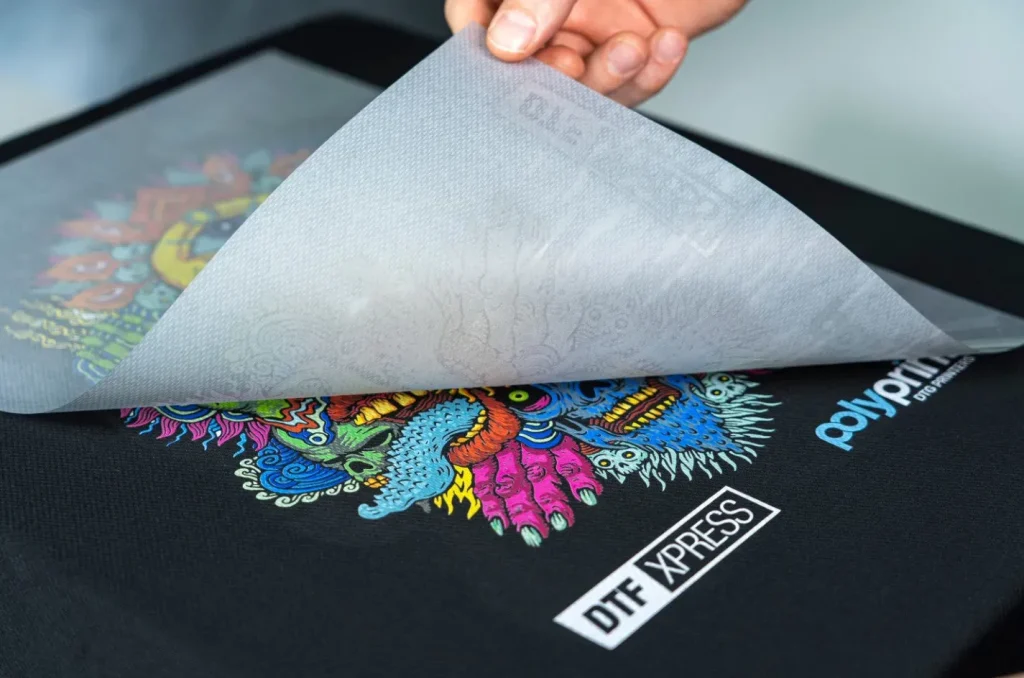
DTF transfers on dark fabrics have transformed garment decoration, enabling bright, durable imagery on black, navy, charcoal, and other deep substrates. Through Direct-to-film printing, designers can achieve bright color DTF transfers with bold tones on dark backgrounds, powered by a white underbase that preserves vibrancy. With the right workflow, DTF on black shirts colorfast performance becomes reliable thanks to a robust white underbase, precise curing, and correct heat settings. Compared with traditional screen printing on dark fabrics, DTF vs screen printing on dark fabrics offers faster setup for small runs and sharper detail when correctly executed. A disciplined prepress process, color management, and testing will help you achieve consistently bright prints that stand up to washing and wear.
In plain terms, this technology uses a printable carrier film and heat to fuse artwork to fabric, delivering color-rich designs on dark garments. A central tenet is applying an opaque white base before color layers so the artwork reads clearly against deep base fabrics. From an SEO and LSI perspective, you can describe this as pigment transfer using film, white-bottom printing, or film-based garment decoration. Key considerations include substrate compatibility, color management, curing control, and wash durability to ensure long-lasting results. Practice steps such as small-sample testing on the target material and documenting outcomes help refine the process for repeatable success.
DTF transfers on dark fabrics: maximizing brightness and colorfastness
DTF transfers on dark fabrics have reshaped how designers decorate garments, enabling bright, vivid imagery on black, navy, charcoal, and other dark substrates. In a typical Direct-to-film printing workflow, a white underbase is printed first to reflect light and support saturated color layers, resulting in Bright color DTF transfers that pop against a dark background. Achieving this requires careful prepress calibration, ICC profiling, and precise curing to preserve colorfastness through repeated washes.
From prepress to post-press, the key is a robust workflow that maintains color accuracy and durability. When you compare DTF transfers on dark fabrics to other methods, using a strong white underbase and optimized curing delivers superior brightness and colorfast performance. For reference, DTF vs screen printing on dark fabrics often favors DTF for color density and detail on small runs, while screen printing can excel in certain textures at scale.
Direct-to-film printing workflow for vibrant dark fabrics
A clear Direct-to-film printing workflow starts with design files prepared for a white underbase, followed by bold color layers that ride on top of the underbase to ensure visibility on dark substrates. This approach supports Bright color DTF transfers by preserving contrast even on black shirts and other deep-colored fabrics. Consistent file separation, toner density control, and accurate color management help ensure the digital-to-film transition remains faithful to the original artwork.
Practical steps include printing the white underbase first, then layering saturated color passes, and finally applying the adhesive powder and curing to lock in the image. Small test prints on garment swatches with similar fiber content help verify brightness and colorfast outcomes before full production. Emphasize alignment checks to prevent ghosting and maintain crisp edges on dark fabrics.
Color management and curing: preserving brightness on black and navy fabrics
Effective color management starts with ICC profiles calibrated for dark fabrics, ensuring that on-screen proofs translate into faithful prints when viewed on black shirts, navy tops, or charcoal tees. Direct-to-film printing benefits from precise color management because the white underbase interacts with the subsequent color layers to yield Bright color DTF transfers that stay vivid after washing. Regular calibrations between monitor, printer, and film help maintain color consistency across runs.
Curing is the other cornerstone of colorfast performance. Correct adhesive choice, temperature, and dwell time prevent cracking, peeling, or dulling of colors on dark substrates. By maintaining consistent curing conditions and following garment-specific guidelines, you support DTF transfers on dark fabrics that remain colorfast through multiple launderings, preserving both brightness and durability.
Fabric selection and prep: choosing substrates for best saturation
Not all fabrics respond the same to DTF transfers on dark fabrics. Cotton and cotton-poly blends often take color more evenly than pure black polyester, but performance varies with finish, weave, and pre-treatment. Understanding fabric compatibility helps you optimize brightness and color saturation, ensuring that Direct-to-film printing achieves the intended look on black shirts, charcoal, or navy garments.
Prepress decisions, including fabric preconditioning, post-press care, and appropriate heat press settings, play a major role in achieving consistent results. Selecting compatible substrates and using a robust white underbase for dark fabrics set the stage for vibrant, long-lasting prints. When you align fabric choice with your DTF workflow, you improve color fidelity and colorfastness while reducing reprints.
DTF vs screen printing on dark fabrics: troubleshooting tips and best practices
DTF vs screen printing on dark fabrics is a common consideration when planning a production run. While DTF often delivers faster setup for multi-color designs and excellent detail on dark substrates, screen printing can offer cost advantages at very large volumes or for specific textures. For best results, evaluate underbase strength, color density, and washing guidelines to ensure your chosen method meets brightness and durability expectations.
Common issues such as color fading, cracking, or white underbase show-through can be addressed with targeted adjustments. Review underbase opacity, curing temperatures, and pressure, and perform test runs on fabrics with similar finishes. By incorporating best practices—consistent color management, proper curing, and careful workflow planning—you can optimize DTF transfers on dark fabrics or compare them effectively against screen printing to select the best approach for your project.
Frequently Asked Questions
DTF transfers on dark fabrics: what design factors ensure bright colors on black or navy garments?
DTF transfers on dark fabrics benefit from a robust white underbase that neutralizes the garment color and lets bright colors pop. Design with a strong white underbase, calibrate color profiles for dark fabrics, and run test prints on similar materials. Ensure proper curing and fabric compatibility to maintain brightness and durability.
Direct-to-film printing on dark fabrics: how does the white underbase contribute to color brightness?
Direct-to-film printing on dark fabrics relies on printing a white underbase first on the transfer film, followed by color layers and adhesive powder. This white base reflects light and makes colors appear vivid when fused to the garment. To maximize results, use ICC profiles for dark substrates, perform small tests, and cure per manufacturer guidelines.
Bright color DTF transfers on dark fabrics: what practices maximize vivid, colorfast results?
Bright color DTF transfers on dark fabrics require bold color layers over a solid white base. Practical steps: design with solid fills, avoid fine gradients, print a dense white underbase, calibrate colors with a color chart, and test on similar fabrics; then follow proper curing and washing guidelines.
DTF on black shirts colorfast: what steps ensure long-lasting colorfastness?
DTF on black shirts colorfast can be achieved with proper workflow: a dense white underbase, correct curing temperature and time, and adherence to washing instructions to prevent fading or cracking. Avoid excessive adhesive or over-curing; verify compatibility with fabric and run tests on similar garments.
DTF vs screen printing on dark fabrics: when should you choose DTF transfers on dark fabrics over screen printing?
DTF transfers on dark fabrics are typically ideal for small runs with full color and fine detail, offering faster setup and strong brightness. Screen printing may be cheaper for very large runs of simple designs but requires more white layers for dark fabrics and offers a different texture. Choose based on run size, design complexity, and the desired finish.
| Aspect | Key Points |
|---|---|
| White underbase quality | A robust white layer is essential for bright colors on dark fabrics; ensure adequate density without blocking color transfer |
| Color management & ICC profiling | Calibrate monitors and printers with profiles tailored to dark fabrics to preserve color accuracy |
| Adhesive & curing | Choose compatible adhesive and cure at the recommended temperature/time to prevent cracking or peeling |
| Fabric compatibility | Fiber content, weave, and texture affect ink uptake and saturation; test on similar fabrics |
| Design & prepress for brightness | Use strong white underbase and bold color layers; avoid overly fine details that blur on dark substrates |
| Workflow sequence | White underbase first, then color layers; ensure alignment and minimize ghosting |
| Testing & care | Run small tests on similar fabrics; follow curing and washing guidelines to preserve colorfastness |
Summary
DTF transfers on dark fabrics deliver bright, durable results that make artwork pop on black, navy, charcoal, and other dark substrates. This guide explains essential concepts: using a strong white underbase, careful color management with ICC profiles, proper adhesive and curing, fabric compatibility, and design choices that maximize brightness on dark garments. Following a step-by-step workflow—white underbase first, color layering, proper curing, and post-press care—helps achieve vivid colors that stay vivid after washing. Regular testing on similar fabrics and thoughtful troubleshooting further ensure colorfastness and consistency across runs. With the right workflow and attention to fabric specifics, DTF transfers on dark fabrics can rival other methods in brightness, durability, and detail.